#MemberMonday: Community Food Bank of San Benito County
agosto 24, 2021
FILTRAR
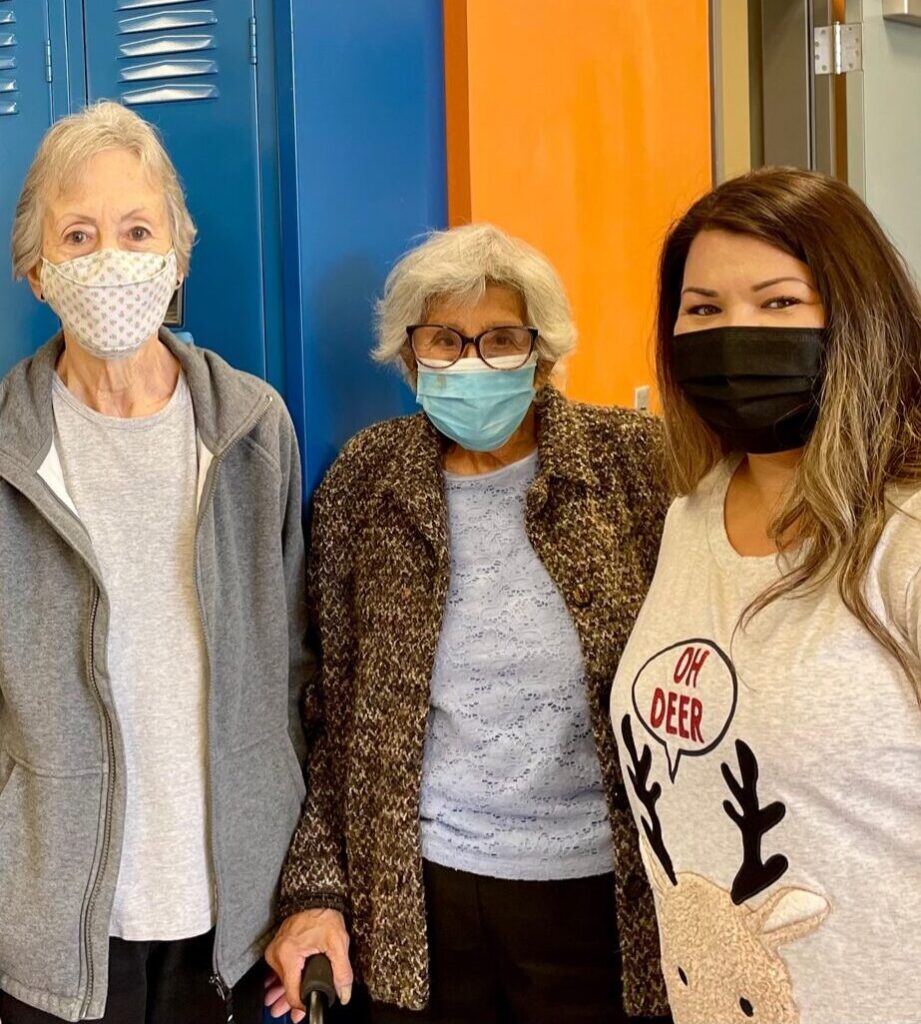
Community FoodBank has been a stable force for over 30 years in San Benito County. Its origin came just after the 1989 Loma Prieta earthquake when community members stepped up to feed those in need — and it has continued to be community-driven ever since. They recently had the joy of a visit from Juanita, who was one of the community members responsible for that origin. She became a volunteer, then a Director on the Board, and continued to volunteer with food distributions until the pandemic forced her to stop at the age of 97 (pictured left, center).
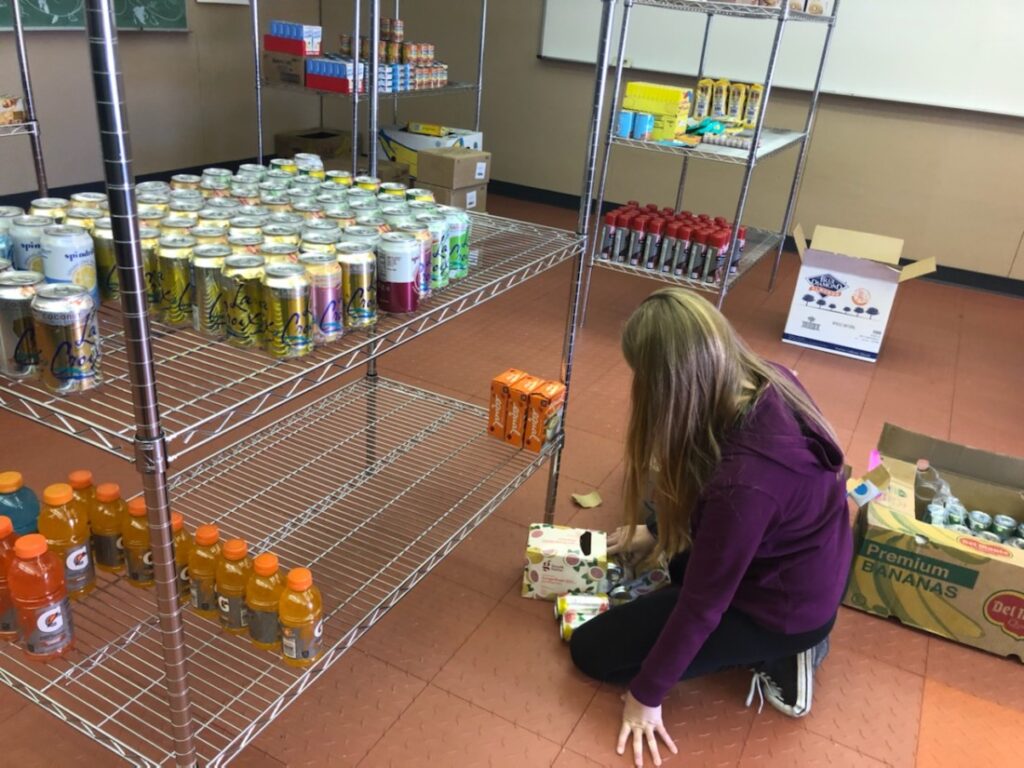
The pandemic forced a lot of changes, in fact. Drive-through style food distributions became the new norm — but in May of 2021, Community Food Bank was able to re-open “The Marketplace.” The food bank’s marketplace program offers customers a variety of fresh produce and groceries arranged in a market-style shopping environment. After check-in at the front door, shoppers select a cart and make the rounds, assisted by a friendly volunteer team that is on-hand each week to keep the groceries stocked and the smiles showing.
The number of people the food bank is serving is still triple their pre-pandemic operation; this has led to putting their focus into building their partners and agencies to assist with getting food out to neighbors in need. They now have 22 active programs and partner agencies — up from just 2 in March 2020. Their goal is to get pantries on school campuses, and San Benito High School has already done a stellar job implementing theirs.
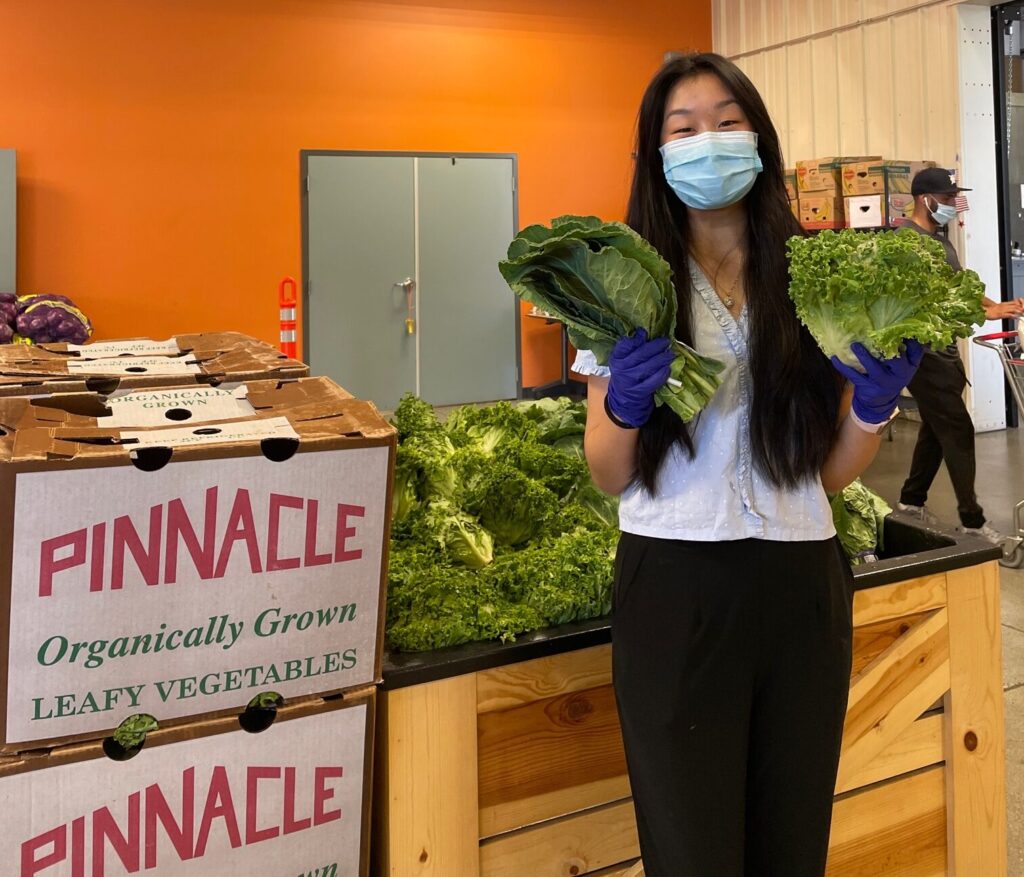
This isn’t surprising — San Benito High School students are extra involved at the food bank. Various clubs including AVID, Key Club and ASB dedicate at least one morning each week to volunteering. As one student, Morgan Fu, shared,
“I volunteer as a member of the San Benito Key Club. Key Club is an international service organization that is student-led by high schoolers. This club has helped me grow a deep passion and love for service and volunteering. Not only do I get the satisfaction of serving my community, but I also meet and interact with some amazing people that help me grow as a person. Unfortunately, because of the pandemic, Key Club was forced to do online service for a year. The Food Bank finally gave the club an opportunity to do some in-person service and we couldn’t be more grateful.”
All [Key Club] members who attended weekly, whether it was the Build Bag or Marketplace, had such a fun time. The Food Bank has played a huge role in my summer, and I hope to have the club volunteer some time during the school year!
Morgan Fu, San Benito High School Student (pictured)
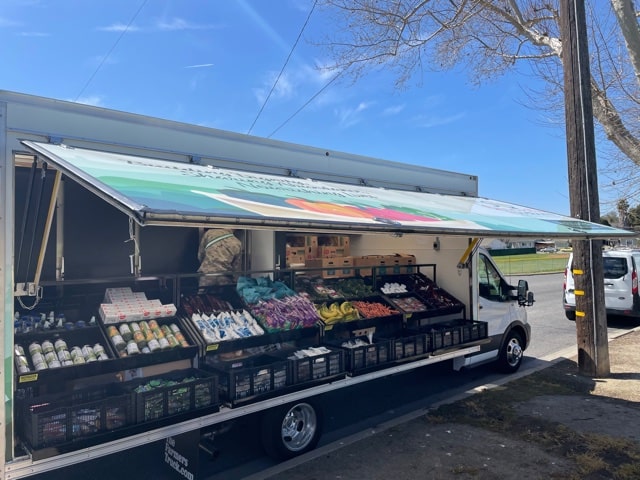
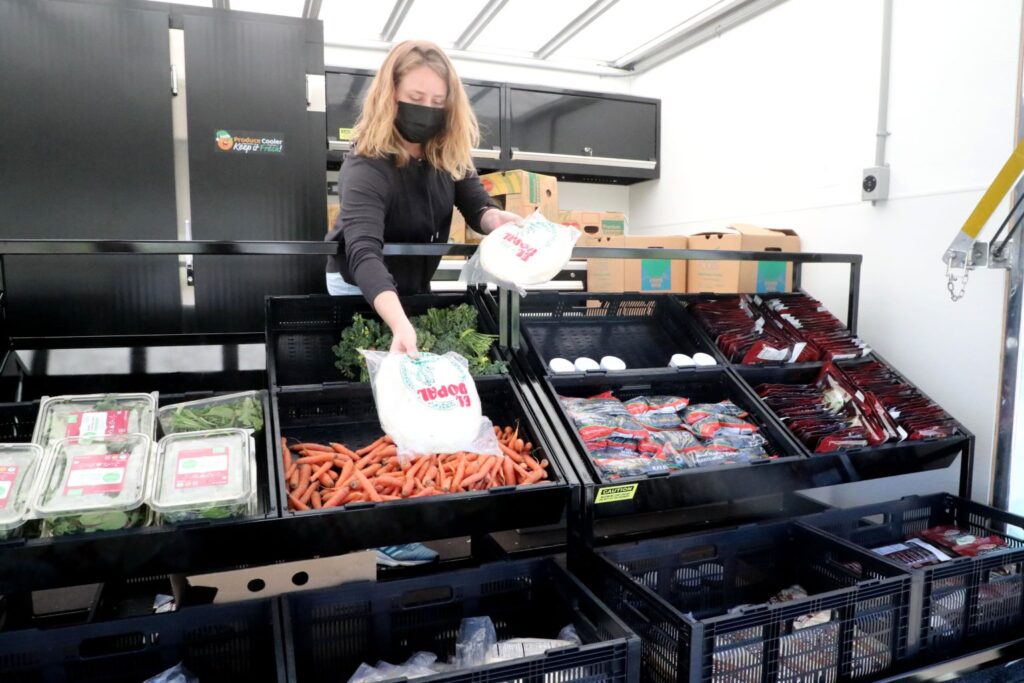
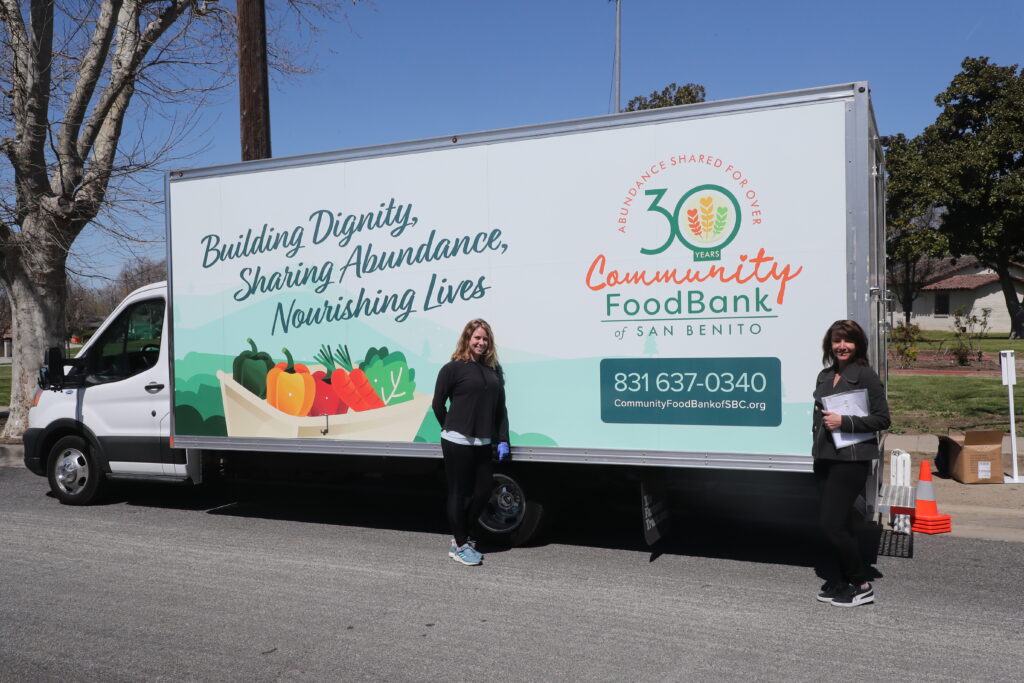
Community Food Bank’s newest program, the Mobile Pantry (pictured below) rolled out in March 2021 and has 8 stops within the City of Hollister. The goal is to reach community members who might be disabled or who lack transport options to get to food distribution locations.
We thank Community Food Bank for all the work they do every day to create a San Benito County free from hunger. As a self-described “small food bank,” we think they make a BIG impact!
We are so appreciative of CAFB’s support of community members in need. Their advocacy has helped ensure valuable resources are available. Being a small food bank, we don’t have the capacity to take on public policy and fight for hunger at the state level — so it’s comforting to know we have CAFB in our corner doing that for us.
Sarah Nordwick, Communications & Engagement Director
All photos/quotes/information courtesy Community Food Bank of San Benito County
Community Advisory Board Research Highlights Challenges to Food Access and Pathways Forward
Jars of Hope™ Returns to Support California Communities This October
Growing Together: A New Model Supporting Bay Area Farmers and Families
Understanding Hunger in California: Why Collaboration Matters
We Thank California Budget Leaders for Shoring Up the Nutrition Safety Net. More is Needed to Address the Ongoing Hunger Crisis.
Together Against Hunger: Turning Every Closing Into Community Impact
Miembro destacado de California Food Banks™: Banco de Alimentos del Norte de Nevada
La Asociación de Bancos de Alimentos de California anuncia el cambio de nombre a California Food Banks™.
California Food Banks™ aplaude a los líderes presupuestarios de California por invertir en bancos de alimentos y en la red de seguridad nutricional del estado.
¡Noticias emocionantes! El fiscal general Bonta logra un acuerdo y entrega 8,9 millones de huevos a bancos de alimentos de California.
Community Advisory Board Research Highlights Challenges to Food Access and Pathways ForwardJars of Hope™ Returns to Support California Communities This OctoberGrowing Together: A New Model Supporting Bay Area Farmers and FamiliesUnderstanding Hunger in California: Why Collaboration MattersWe Thank California Budget Leaders for Shoring Up the Nutrition Safety Net. More is Needed to Address the Ongoing Hunger Crisis. Together Against Hunger: Turning Every Closing Into Community ImpactMiembro destacado de California Food Banks™: Banco de Alimentos del Norte de NevadaLa Asociación de Bancos de Alimentos de California anuncia el cambio de nombre a California Food Banks™.California Food Banks™ aplaude a los líderes presupuestarios de California por invertir en bancos de alimentos y en la red de seguridad nutricional del estado.¡Noticias emocionantes! El fiscal general Bonta logra un acuerdo y entrega 8,9 millones de huevos a bancos de alimentos de California.