The profile found that Latinos are more likely than the state’s average resident to live in low-income households, experience inadequate access to food and have fewer healthy food retailers in their neighborhoods. These factors make it more likely that a person will develop a chronic health condition. Latinos in California are overweight or obese at higher rates and are twice as likely to develop diabetes than White residents.
“The disparities seen among household incomes and the availability of healthy food retailers in California play a role in the higher rates of hunger, overweight and obesity among Latinos. This takes a toll on Latino health, as it is difficult to stay healthy when you do not have enough to eat and have limited access to supermarkets and produce stands that offer a variety of healthy foods,” said David Thomsen, MPP, NCLR Health Policy Analyst and author of the profile.
Findings from “The State of Latino Nutrition in California: How Latino Children and Families Are Faring in the Golden State” include:
More Latino households struggle with not having enough food (43.7 percent), compared with White households (35.7 percent), and the average state household (40.4 percent).
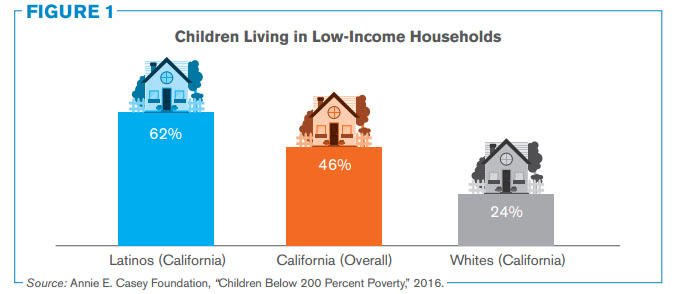
The number of Latino children who live in low-income households (62 percent) is more than double that of White children (24 percent).
Latinos in the state are overweight and obese at higher rates than national and state averages. Among children ages 10-17, 40 percent of Latinos are overweight or obese, compared to 30.5 percent of all children.
On average, Latinos in California live in communities where healthy food retailers represent only 11.9 percent of all food vendors, below the 12.9 percent average in predominantly White communities.
Community Advisory Board Research Highlights Challenges to Food Access and Pathways Forward
Jars of Hope™ Returns to Support California Communities This October
Growing Together: A New Model Supporting Bay Area Farmers and Families
Understanding Hunger in California: Why Collaboration Matters
We Thank California Budget Leaders for Shoring Up the Nutrition Safety Net. More is Needed to Address the Ongoing Hunger Crisis.
Together Against Hunger: Turning Every Closing Into Community Impact
California Food Banks™ Member Spotlight: Food Bank of Northern Nevada
California Association of Food Banks Announces Name Change to California Food Banks™
California Food Banks™ Applauds California Budget Leaders for Investment in Food Banks and the State’s Nutrition Safety Net
Eggciting News! Attorney General Bonta Secures Settlement, Delivers 8.9 Million Eggs to California Food Banks
Community Advisory Board Research Highlights Challenges to Food Access and Pathways ForwardJars of Hope™ Returns to Support California Communities This OctoberGrowing Together: A New Model Supporting Bay Area Farmers and FamiliesUnderstanding Hunger in California: Why Collaboration MattersWe Thank California Budget Leaders for Shoring Up the Nutrition Safety Net. More is Needed to Address the Ongoing Hunger Crisis. Together Against Hunger: Turning Every Closing Into Community ImpactCalifornia Food Banks™ Member Spotlight: Food Bank of Northern NevadaCalifornia Association of Food Banks Announces Name Change to California Food Banks™California Food Banks™ Applauds California Budget Leaders for Investment in Food Banks and the State’s Nutrition Safety NetEggciting News! Attorney General Bonta Secures Settlement, Delivers 8.9 Million Eggs to California Food Banks