THE IMPACT, THE CHALLENGES, & THE COLLECTIVE RESPONSE
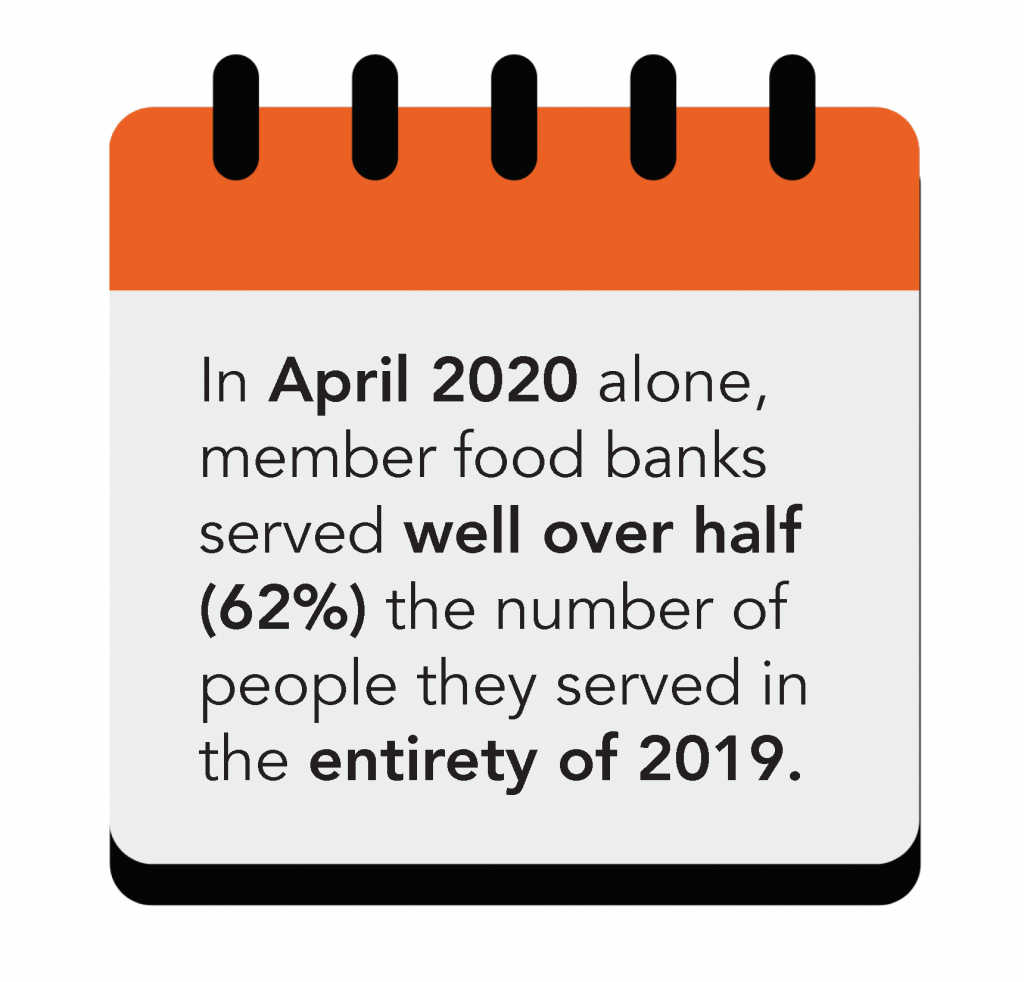
In 2020, the California Association of Food Banks’ 41 member food banks responded to an unprecedented demand for food by rapidly redesigning their program delivery models in order to safely increase food distribution and adjust to necessary safety measures. Still, food donations and staffing resources were vastly outpaced by increased demand.
的 total food distributed by CAFB member food banks increased by 74% between 2019 and 2020. Direct distribution doubled (101%) between 2019 and 2020.
All member food banks provided direct distribution in 2020, including food banks that were not previously providing direct distribution.
Food donations decreased in 2020. Community food drives and retail donations decreased for more than half of food banks while nearly all significantly increased food purchases.
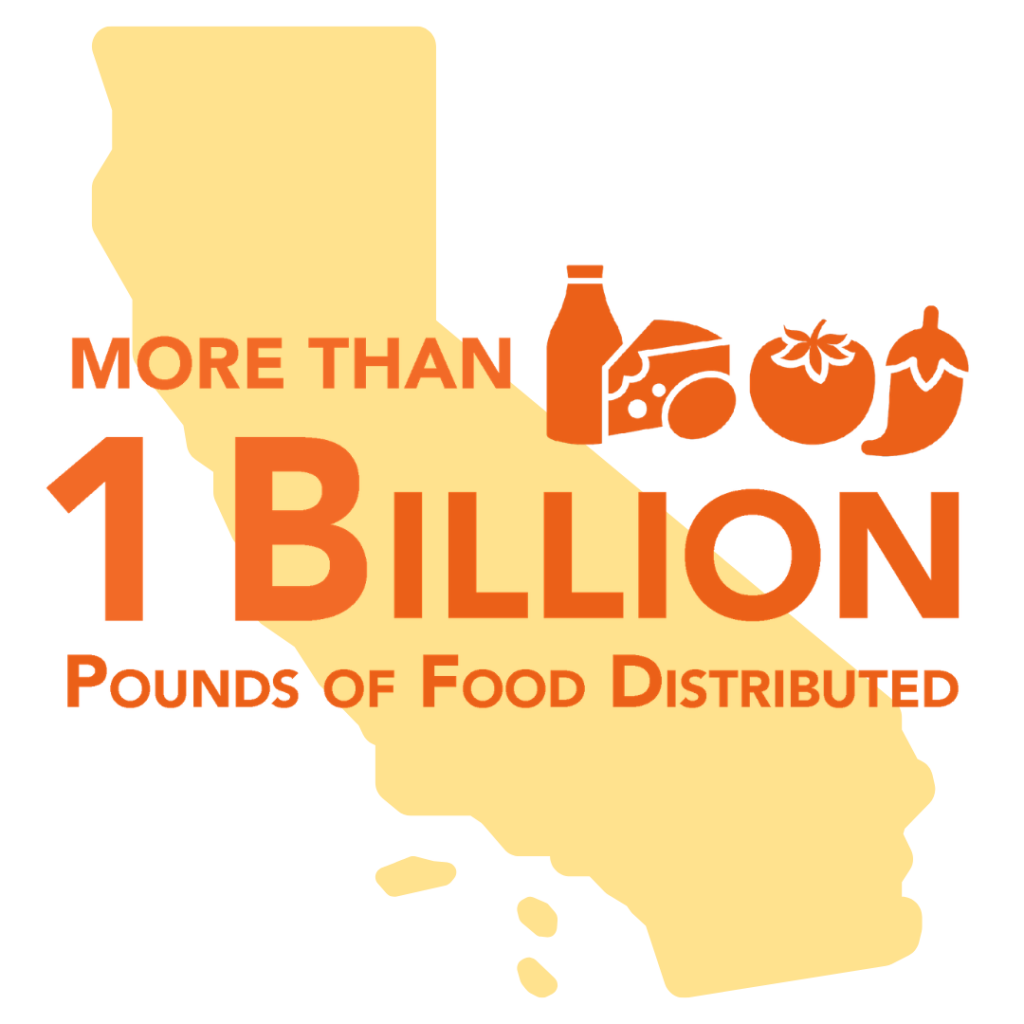
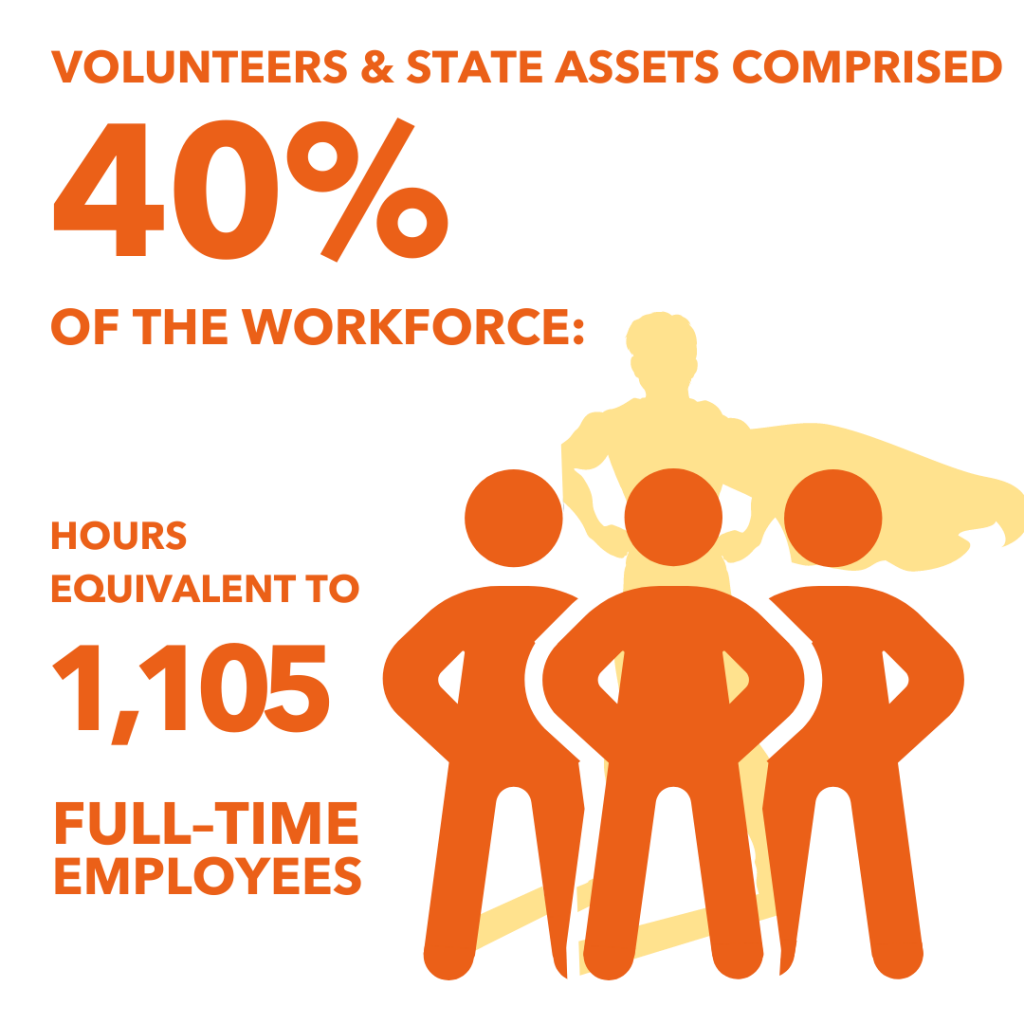
Even while paid staff increased by 13%和 volunteer hours increased by 63% (including state assets such as the National Guard), increases in paid staff and volunteers were still outpaced by increases in food distribution. In order to reach the 1.1 billion pounds of food, or about 917 million meals delivered by CAFB member food banks, operating costs also rose.
Areas with the largest cost increase were 1) Food Purchasing, 2)Packaging Materials和 3) Cleaning/Sanitation Supplies.
Populations most commonly given targeted support were children/families with children, older adults, unhoused people和 college students.
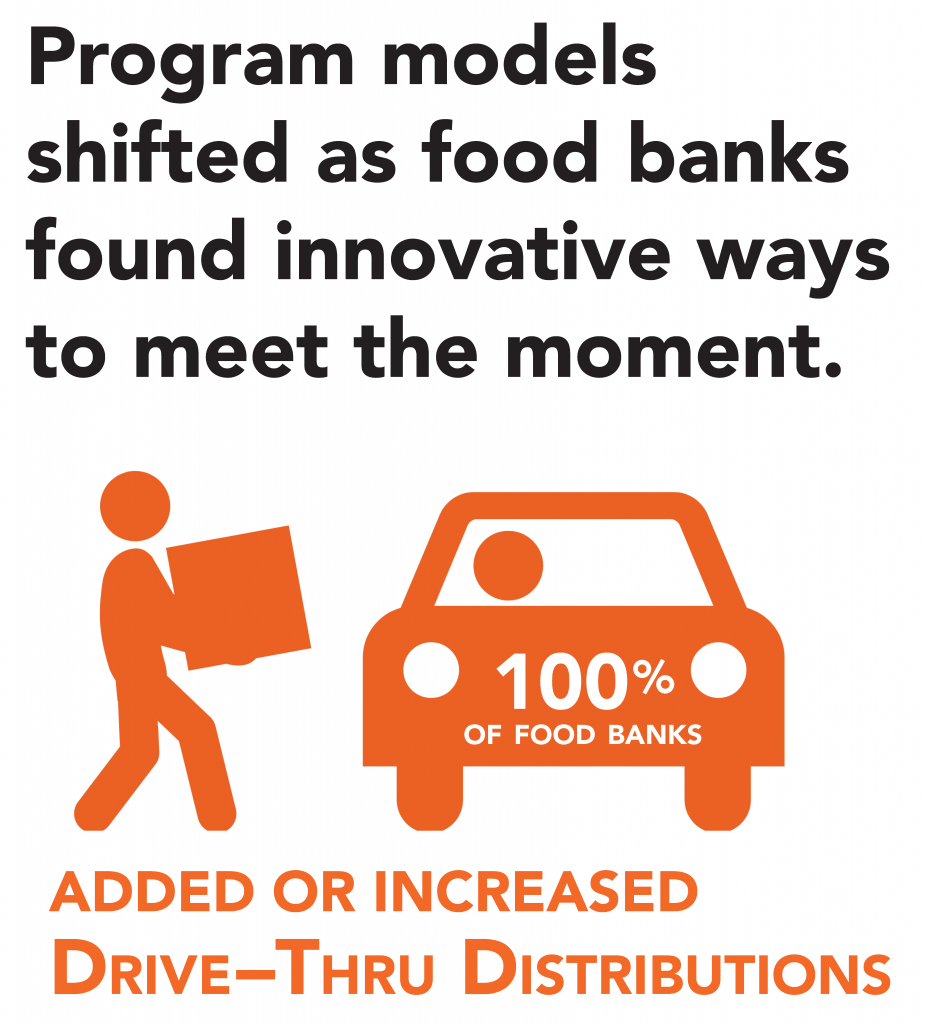
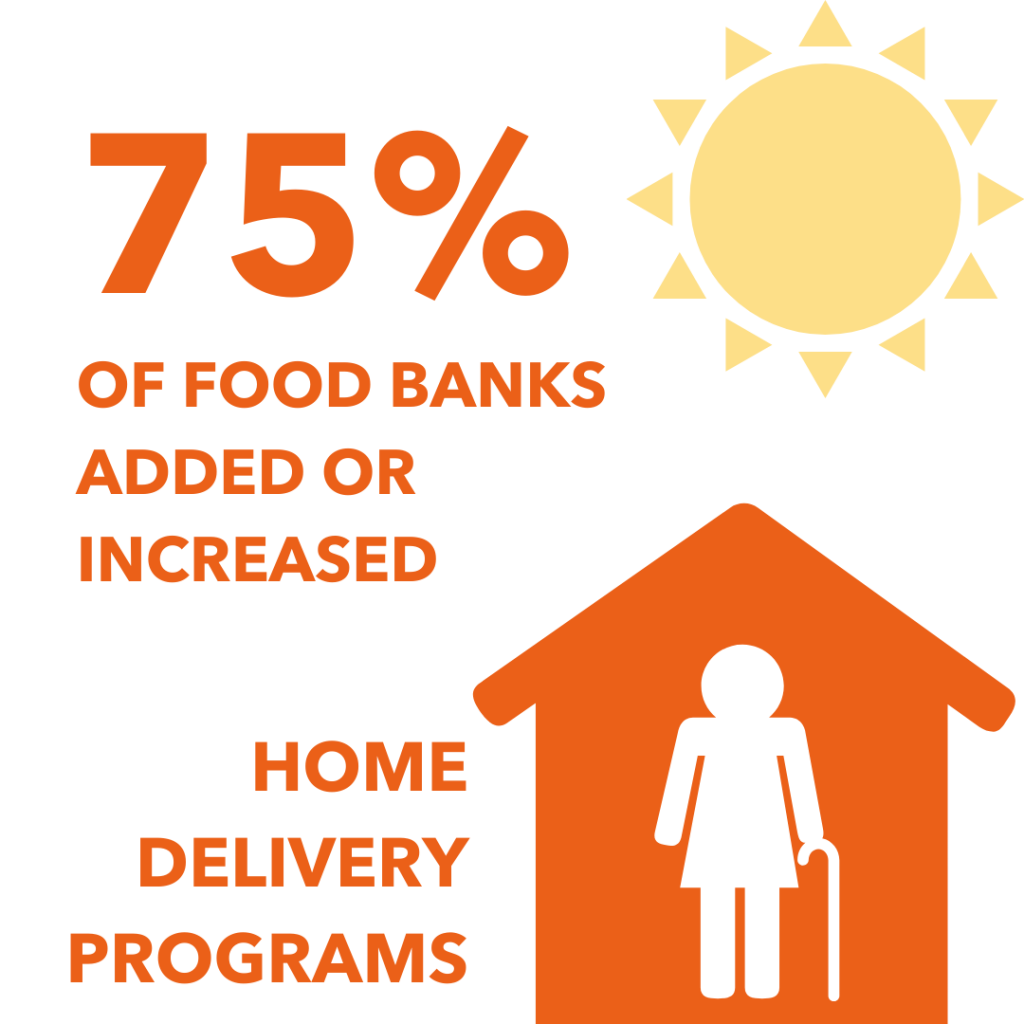
Drive-thru 和 home delivery distributions became commonplace — often meaning decreased opportunity for client choice. In order to meet the moment, food banks had to find ways to distribute food while also ensuring the safety of staff, 义工和 clients. No longer an option due to COVID-19 safety precautions, farmers market-style “shopping” gave way to pre-packaged boxes of food, and custom online food orders shifted towards a fixed list of items.
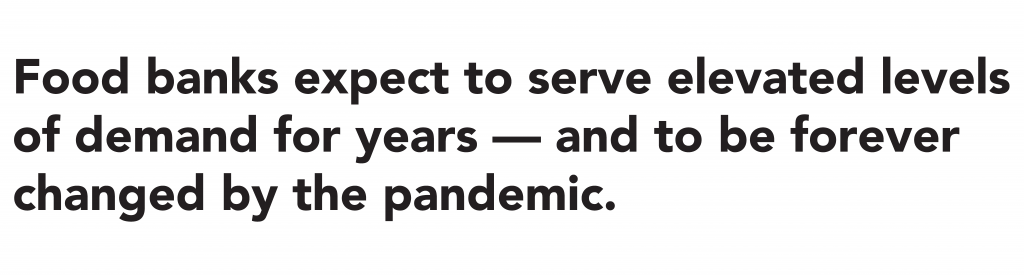
Food banks anticipate the effects of COVID-19 on food insecurity to outlast the pandemic, keeping demand dramatically elevated for a long time to come.
71% of food banks expect that their programming and operations will remain changed in some way beyond the COVID-19 crisis.
After the Great Recession, it took nearly 10 years (until 2018) for food insecurity to return to pre-recession levels.
Understanding Hunger in California: Why Collaboration Matters
We Thank California Budget Leaders for Shoring Up the Nutrition Safety Net. More is Needed to Address the Ongoing Hunger Crisis.
Together Against Hunger: Turning Every Closing Into Community Impact
California Food Banks™ Member Spotlight: Food Bank of Northern Nevada
California Association of Food Banks Announces Name Change to California Food Banks™
California Food Banks™ Applauds California Budget Leaders for Investment in Food Banks and the State’s Nutrition Safety Net
Eggciting News! Attorney General Bonta Secures Settlement, Delivers 8.9 Million Eggs to California Food Banks
联合声明:加州SNAP利益相关者敦促否决主席的农业法案提案;该法案将进一步削弱营养支持并加剧饥饿
CAFB Applauds California Legislature for Investment in Nutrition Safety Net, Food Banks in Joint Budget Agreement
New Research Shows High Food Insecurity in California and Estimates around 40% of Californians Are Unable to Cover the Cost of Basic Needs Where They Live
Understanding Hunger in California: Why Collaboration MattersWe Thank California Budget Leaders for Shoring Up the Nutrition Safety Net. More is Needed to Address the Ongoing Hunger Crisis. Together Against Hunger: Turning Every Closing Into Community ImpactCalifornia Food Banks™ Member Spotlight: Food Bank of Northern NevadaCalifornia Association of Food Banks Announces Name Change to California Food Banks™California Food Banks™ Applauds California Budget Leaders for Investment in Food Banks and the State’s Nutrition Safety NetEggciting News! Attorney General Bonta Secures Settlement, Delivers 8.9 Million Eggs to California Food Banks联合声明:加州SNAP利益相关者敦促否决主席的农业法案提案;该法案将进一步削弱营养支持并加剧饥饿CAFB Applauds California Legislature for Investment in Nutrition Safety Net, Food Banks in Joint Budget AgreementNew Research Shows High Food Insecurity in California and Estimates around 40% of Californians Are Unable to Cover the Cost of Basic Needs Where They Live